Recreating Michelin-star food at home is possible, but it takes far more than a good recipe: the difference between a restaurant plate and a home one lives in technique, sequencing, timing and presentation, not in any single dish. A Michelin-standard meal at home means cooking a multi-course tasting menu where flavours build from light to rich, each course is plated with restaurant precision, and everything lands on time from a single home kitchen — the part almost everyone underestimates. The cooking is learnable. Running the whole night to that standard, on your own, is the hard part.
This is an honest guide to what a Michelin-star meal at home actually involves — the techniques, the sequence, the plating and the logistics — and where the realistic shortcut sits for a dinner that has to be special.
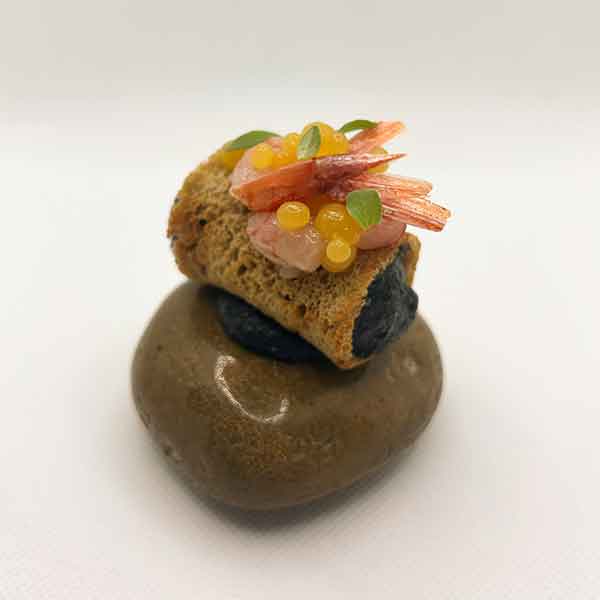
What a Michelin star meal at home actually means
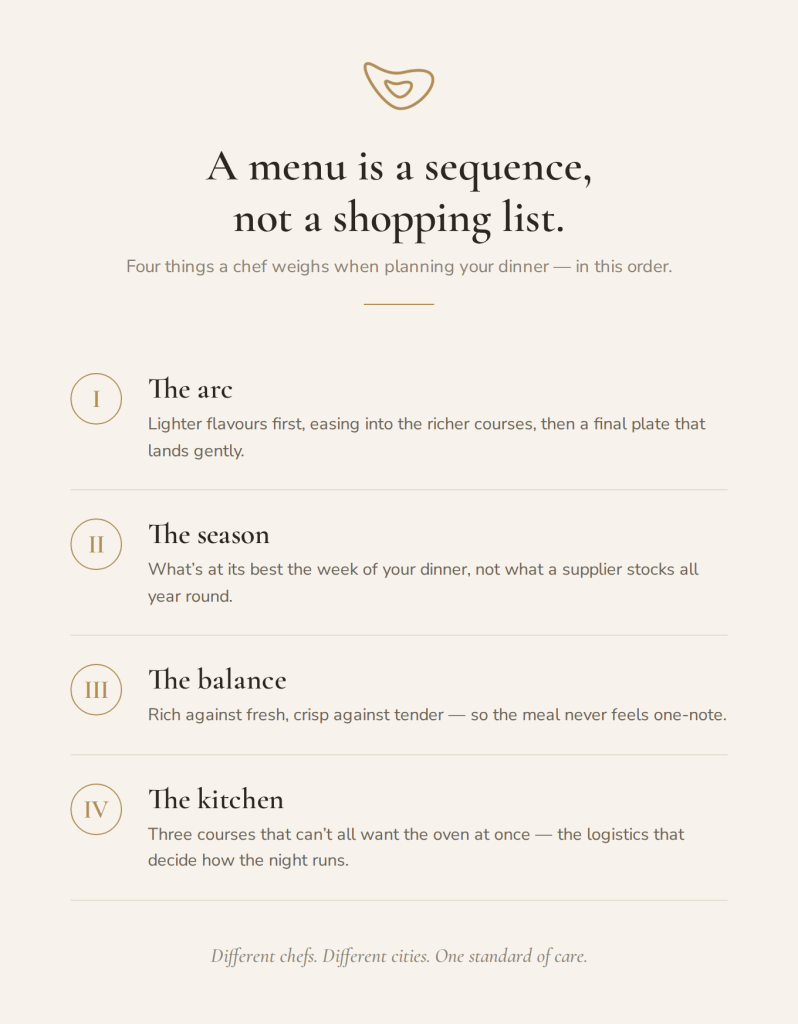
A Michelin-star meal at home is a multi-course tasting menu executed to restaurant standards, not a single showpiece dish. What you are recreating is the full experience: a sequence of small, precise courses that move from light to rich, each one plated deliberately, paced so guests travel through the meal rather than simply eating dinner.
The five criteria Michelin actually judges — quality of ingredients, mastery of technique, harmony of flavours, the chef’s personality in the cuisine, and consistency — are the same standards you are chasing at home. Consistency is the one that catches home cooks out: a restaurant delivers that precision on every plate, every service, while at home you are trying to hit it once, live, while also hosting. That gap is the whole story of Michelin food at home.
The tasting menu: the Michelin star food experience you’re recreating
A Michelin-style tasting menu at home is built as a sequence of distinct courses, each with a job, not a random run of favourite dishes. Understanding the anatomy is the first step, because the dining experience — the sense of a meal that builds and resolves — comes from the structure, not from any one plate.
A full sequence tends to follow a recognisable shape. An amuse-bouche opens the night: a single bite that sets the tone. Lighter courses follow — something built on vegetables, fish or shellfish — before the meal works towards its richest point, usually a meat main course. A palate cleanser, often a sorbet or granita, resets the mouth before the heaviest course or before the shift to sweet. Many menus add a pre-dessert — a light, sharp interlude — ahead of the dessert proper, then close with petit fours alongside coffee, the small final bite that sends everyone off. Portions stay small so the whole sequence satisfies without overwhelming, and professional kitchens pace courses roughly ten to fifteen minutes apart to keep the rhythm.
Recreating that at home is as much hosting as cooking. Each course wants a brief description as it lands, the table wants to feel considered, and the pacing has to hold even as you cook — which is exactly where a solo host starts to struggle.
How Michelin-starred chefs cook: techniques for meals at home
Michelin-level results at home depend on mastering a handful of precise techniques, not on rare ingredients or secret recipes. The methods below are what give restaurant food its consistency, and each one carries a real learning curve and, in some cases, a real equipment cost.
Sous vide is the signature example. Ingredients are vacuum-sealed and cooked in a precisely temperature-controlled water bath, which delivers even cooking edge to edge and the same result every single time — the consistency a home stove struggles to match. It was popularised in fine dining by chefs like Thomas Keller and Heston Blumenthal, and while home sous vide kit now exists, it means buying and learning new equipment. Confit — cooking slowly in fat for tender, deeply flavoured results — and a proper sear to build a crust are the kind of fundamentals that reward practice and punish rushing.
Underpinning all of it is mise en place: everything measured, prepped and in its place before cooking starts. In a professional kitchen this is non-negotiable, and it is the single habit most home cooks skip. Without it, a multi-course menu unravels the moment two courses need attention at once. The techniques are learnable; the discipline to run them all together, under time pressure, is what takes professionals years.
Plating like a Michelin star chef at home
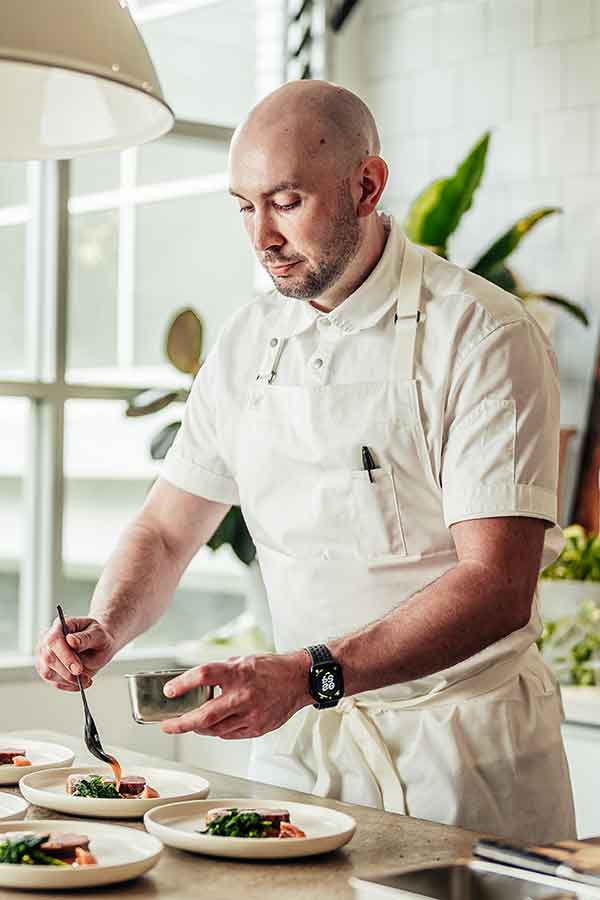
Plating a dish like a Michelin chef means treating the plate as a composition — controlled portions, negative space, contrast and intentional placement — so the food is judged by eye before the first bite. For a tasting menu, where portions are small, presentation stops being optional and becomes part of the dish itself; artfully plated food is genuinely perceived as tasting better.
A few principles do most of the work. Use negative space — a clean white plate as a canvas, food never crowding the edge. Build in contrast of colour, height and texture, and set warm against cool where it fits. Place elements with intent rather than symmetry, often off-centre, using a clear visual hierarchy so the eye knows where to land. Sauces can be painted or spooned onto the plate before the main element arrives, and plate edges are always wiped clean before serving. The tools matter too: a spoon for smears and quenelles, a tweezer for placing delicate garnishes with precision.
Garnish earns its place. Every element on the plate should be edible and already connected to the dish — a herb that is already in the sauce, not a decorative afterthought. Presentation at this level is composition, not decoration.
Seasonality: how Michelin chefs choose menu ingredients
Michelin kitchens design around ingredients at their seasonal peak, and doing the same at home is the highest-value habit a home cook can adopt. Fine-dining menus change with the seasons precisely so produce reaches the plate at its best, and the same principle turns a good home dish into a memorable one.
In practice that means letting what is genuinely good that week lead the menu rather than forcing a fixed recipe. Peak-season vegetables and herbs — fresh peas, a crisp radish, whatever is at its best — alongside quality proteins and seafood, with sauces and stocks built from scratch to tie a plate together. Chefs also preserve the season to use later — a quick pickle of a vegetable at its peak adds a sharp, acidic contrast to a plate months on. Confit and pickle and similar methods make the most of humble ingredients, which is part of why seasonality and technique work hand in hand. Sourcing well — good markets, specialist suppliers — is where a memorable home menu genuinely begins.
Wine pairing and portion control: the fine dining details home cooks skip
Wine pairing and portion control are two details that quietly separate a restaurant tasting menu from a home attempt, and both are easy to overlook. A considered pairing lifts each course, matching the weight and acidity of the wine to the dish so the two elevate each other rather than compete; some courses, like a palate cleanser, are deliberately served without a pairing to reset the guest.
Portion control is the other. A tasting menu works because each course is small — a few bites — so guests finish the full sequence satisfied rather than defeated halfway through. Home cooks tend to over-serve, which collapses the guest experience and the arc of the meal by the third course. Judging portions across eight or ten courses so the whole night lands, while also managing pacing and pairing, is a genuine layer of planning on top of the cooking itself.
The shortcut: a private chef for Michelin star food at home
For a dinner that has to be special, the realistic way to get Michelin-standard food at home is to bring in a private chef, rather than attempting the full production solo. Everything above — the sequencing, the techniques, the plating, the seasonal sourcing, the pairing and pacing — is the daily work of michelin-starred kitchens, and exactly what a professional chef resolves before they arrive, and executes while you stay at the table with your guests.
That is the honest trade-off. Learning to cook Michelin-standard food at home is a genuinely rewarding pursuit, and worth doing for its own sake. But for the night that matters — a milestone, an anniversary, a dinner you want to remember rather than survive — the private-chef route delivers the experience without turning the host into a stressed one-person brigade. The food arrives at that standard, in the comfort of your own home, and the only job left is enjoying it.
Frequently asked questions
Can you really make Michelin-star food at home?
Yes, in the sense that the techniques and dishes can be learned and executed at home, but matching a restaurant’s consistency and multi-course pacing solo is genuinely difficult. The cooking is achievable with practice; running a full tasting menu to that standard while hosting is the hard part, which is why many people bring in a private chef for occasions that need to be special.
What techniques do michelin-starred chefs use for cooking at home?
Core techniques include sous vide (precise temperature-controlled cooking for even, consistent results), confit (slow cooking in fat for tenderness), a proper sear for crust and flavour, and above all mise en place — prepping and organising everything before cooking begins. Mise en place is the habit that makes a multi-course menu possible at home.
What is mise en place and why does it matter?
Mise en place is the practice of measuring, preparing and arranging every ingredient and tool before cooking starts. It matters because a tasting menu has many moving parts, and without everything prepped in advance, the sequence falls apart the moment two courses need attention at once. It is the single most important habit separating smooth home service from chaos.
How many courses should a tasting menu at home have?
There is no fixed number, but home tasting menus commonly run five to eight courses, with portions kept small so guests finish satisfied rather than overly full. A five-course meal typically runs two to two and a half hours; more courses extend the evening further. The right length depends on the occasion and how much you can realistically execute from one kitchen.
How do you plate food like a Michelin chef at home?
Treat the plate as a composition: use a clean plate with generous negative space, build contrast in colour, height and texture, place elements with intent rather than symmetry, and keep every garnish edible and relevant to the dish. A spoon for sauces and a tweezer for delicate garnishes help, and plate edges should always be wiped clean before serving.
Is it better to hire a private chef or cook it yourself?
For learning and everyday enjoyment, cooking it yourself is rewarding and entirely worthwhile. For a special occasion where the night has to land, a private chef removes the risk — handling the sequencing, techniques, plating and timing so you can host rather than cook. The choice comes down to whether the evening is about the process of cooking or about the experience for your guests.
Sources
The Michelin award criteria referenced in this article are published by the Michelin Guide.